🗨️ Overview
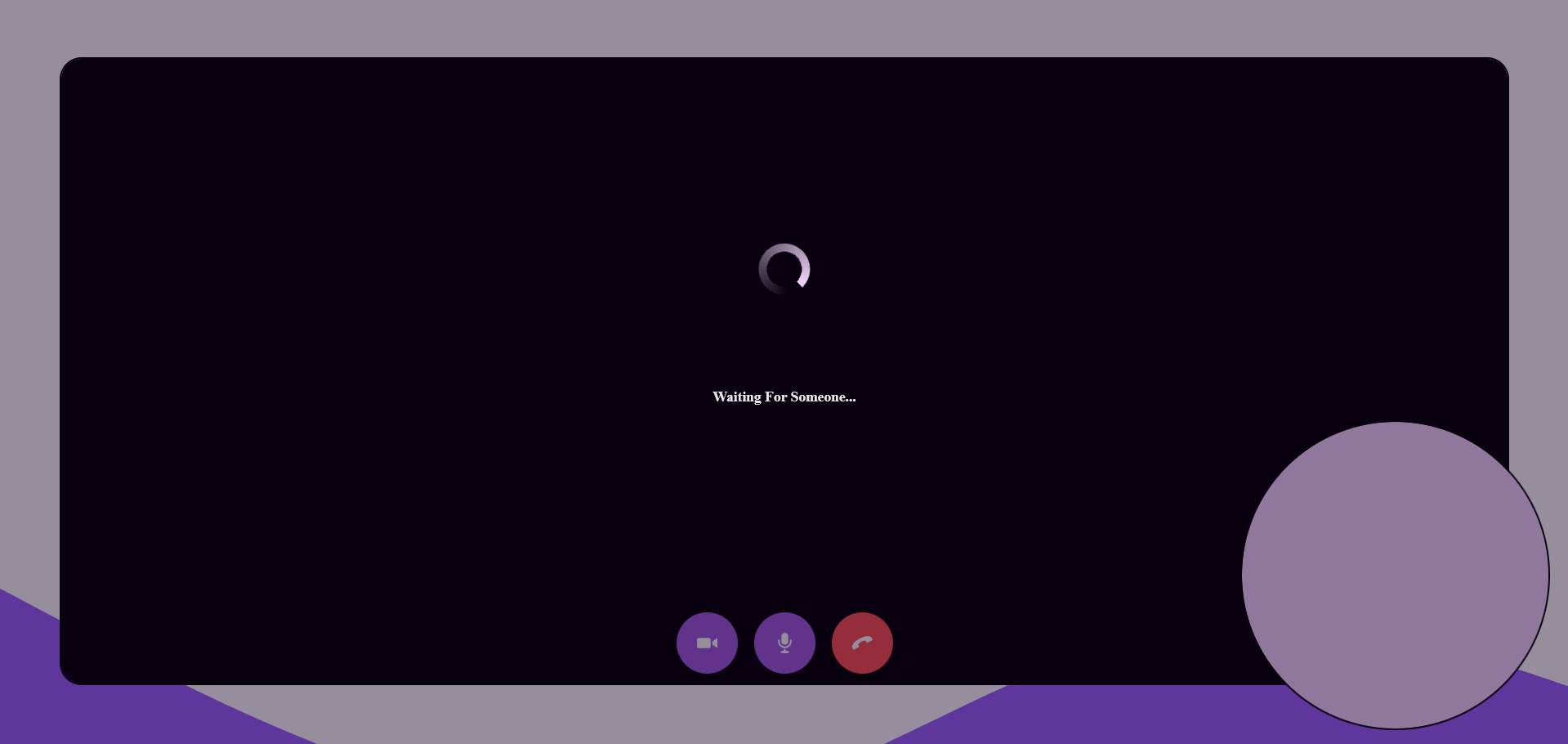
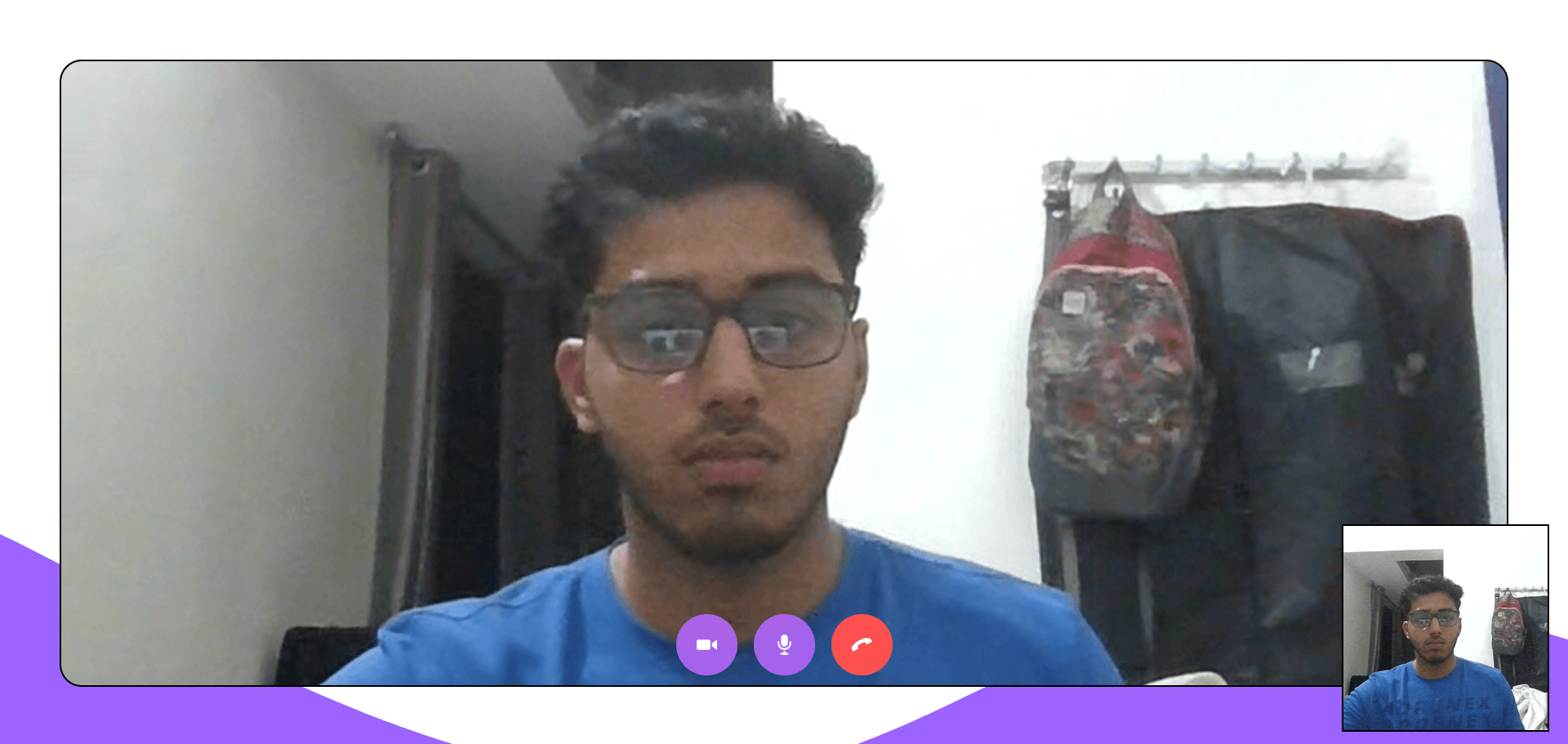
This is a web-based Omegle clone where two individuals can connect via video calls. It was developed as part of my second-year internship to explore and implement WebRTC. The main objective of the project was to understand peer-to-peer (P2P) connections and real-time communication in browsers.
At a high level:
- The browser initially uses a central server to exchange offer and answer objects.
- After the WebRTC handshake is complete, browsers communicate directly without the server acting as a middleman.
- Even if the server goes down, the peer-to-peer connection remains intact.
💻 Software Stack
| Layer | Technologies |
|---|---|
| Frontend | React, socket.io-client |
| Backend | Node.js, Express, CORS, socket.io |
| Protocol | WebRTC |
🛡️ Why this stack?
- WebRTC was chosen because it provides real-time peer-to-peer video/audio communication natively in browsers.
- React helped rapidly build the UI in a component-driven way.
- Socket.IO was used for the signaling server to exchange connection metadata (offer/answer, ICE candidates).
- Express + Node.js was used to quickly build a minimal server for handling signaling events.
- CORS enabled cross-origin requests between client and deployed backend.
🛠️ Installation & Usage
To run the app locally, follow these steps:
# Clone the repository
git clone git@github.com:HISHAN03/Omegle.git
cd Omegle
Install Dependencies
# Server
cd server
npm install

# Client
cd ../client
npm install
Run the app
# Start the client
cd client
npm run dev
U can deploy the backend server in locally and update the connection url in the client side
Access the app
Open your browser and go to:
http://localhost:5173
🧠 Peer-to-Peer (P2P) — How it works
- Peer-to-peer allows direct communication between two browsers after an initial handshake via the signaling server.
- This exchange includes session descriptions (offer/answer) and ICE candidates.
- Once the handshake is complete, media (video/audio) streams flow directly between peers, ensuring low latency and server independence.
🖼️ Screenshots